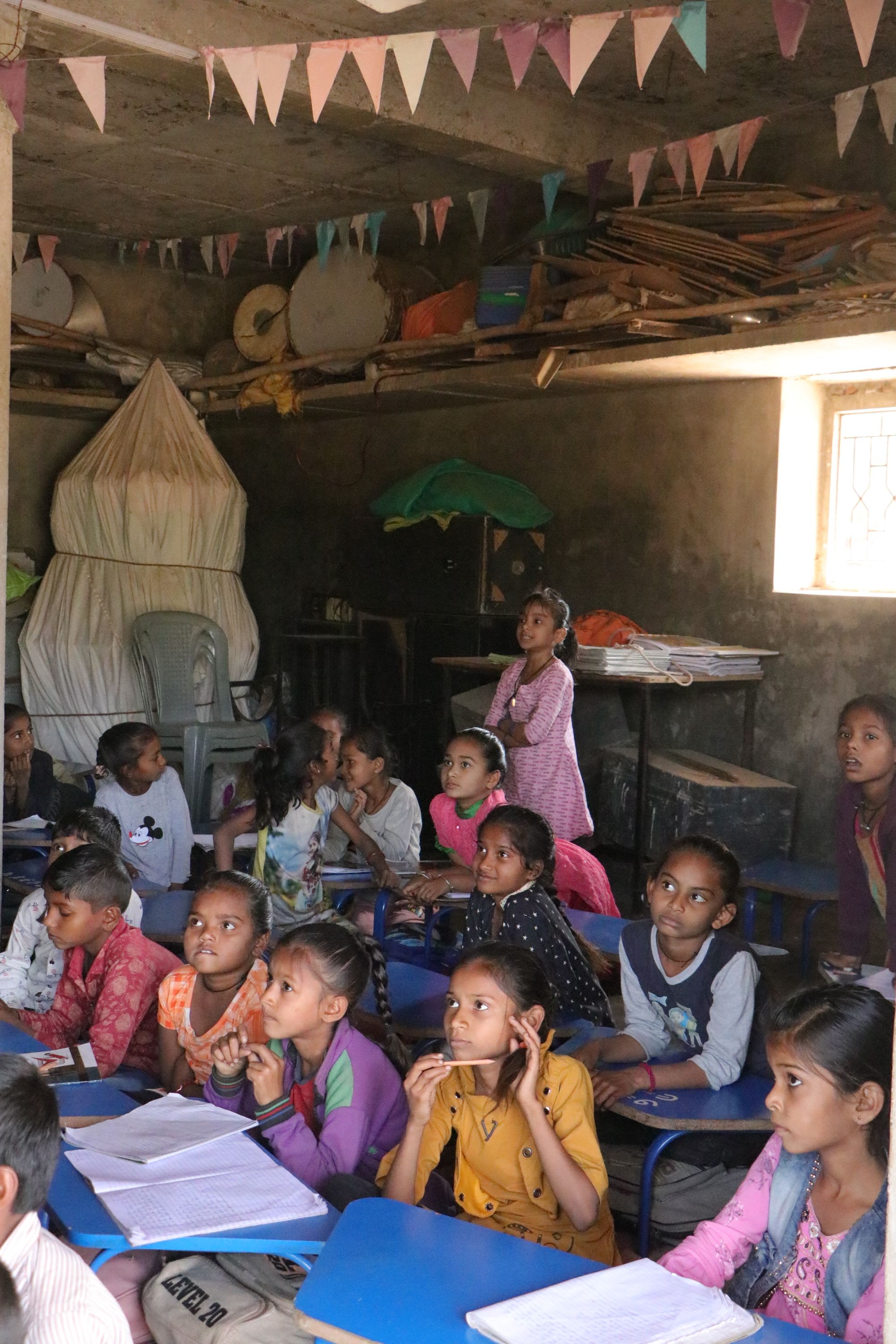
A group of children learning attentively in a rural classroom in Banaskantha, Gujarat

03 — Domain of excellence

Academic Excellence

Excellence measured by curiosity, creativity, research capability and judgement — not examination scores alone.

Purpose

Where Process Excellence concerns how institutions operate, Academic Excellence concerns how students learn, how teachers teach, how curricula evolve and how institutions achieve educational quality.

Vision

To enable every learner, educator and educational institution to achieve their highest academic potential through learner-centred education, evidence-based pedagogy, curriculum innovation, educational research, technology integration and continuous institutional improvement.

Mission

To develop policies, frameworks, curricula, standards and capacity-building programmes that improve teaching quality, learning outcomes, assessment systems, educational leadership, faculty development and institutional excellence across schools, colleges, universities and research institutions.

01 — The social case

Why this matters.

Education systems worldwide are undergoing profound transformation driven by technological change, demographic shifts, globalisation and evolving workforce expectations. Many institutions continue to face significant structural challenges.
  • 01Learning focused primarily on examinations rather than understanding
  • 02Curriculum overload with limited interdisciplinary learning
  • 03Inconsistent teaching quality
  • 04Limited student engagement
  • 05Weak research culture
  • 06Outdated assessment practices
  • 07Insufficient integration of technology
  • 08Gaps between education and employability
  • 09Limited opportunities for personalised learning
  • 10Unequal access to high-quality education

02 — The institutional case

What it returns.

For governments, Academic Excellence contributes to national productivity, innovation, social mobility and long-term economic development.
  • Improved learning outcomes
  • Better teacher effectiveness
  • Higher student retention
  • Stronger graduate employability
  • Increased research productivity
  • Enhanced institutional reputation
  • Better accreditation outcomes
  • Greater innovation capacity
  • Improved international competitiveness
  • Sustainable institutional growth

In short

The Committee helps institutions redesign curriculum, teaching, assessment, faculty development and learning ecosystems so that every learner has the opportunity to reach their full potential.

03 — Strategic objectives

What the committee is working towards.

  • 01Promote learner-centred education
  • 02Strengthen curriculum quality
  • 03Improve teaching effectiveness
  • 04Modernise assessment systems
  • 05Build research capability
  • 06Promote educational innovation
  • 07Integrate artificial intelligence responsibly into teaching and learning
  • 08Strengthen academic leadership
  • 09Foster interdisciplinary collaboration
  • 10Create a culture of lifelong learning
Three university students studying together with books outside a historic campus building

Pexels

Scope

  • School Education
  • Higher Education
  • Technical Education
  • Teacher Education
  • Research Institutions
  • Lifelong Learning

Success measures

  • Learning outcome improvements
  • Faculty participation
  • Student engagement
  • Research publications
  • Institutional accreditation performance
  • Graduate employability indicators

04 — Deliverables and outcomes

What this domain produces, and over what horizon.

Deliverables

  • Academic Excellence Framework
  • Curriculum Standards
  • Teaching Excellence Toolkit
  • Assessment Framework
  • Faculty Development Programmes
  • Research Guidelines
  • Institutional Benchmarking Framework
  1. Short term

    • Academic Excellence framework developed
    • Pilot institutions identified
    • Faculty development programmes initiated
  2. Medium term

    • Excellence Cells established
    • Improved teaching quality
    • Enhanced student engagement
    • Modernised assessment practices
  3. Long term

    • A national Academic Excellence ecosystem
    • Higher-quality graduates
    • Strong research culture
    • Internationally competitive educational institutions
    • Sustainable culture of academic innovation

05 — How the work is organised

Academic Excellence Committee

To establish a comprehensive framework for Academic Excellence that supports continuous improvement in curriculum, teaching, assessment, research, innovation and institutional quality across the educational ecosystem.
The full committee

Chairperson

Dr. Sushannt Mysorekar

01

Curriculum

To design competency-based, learner-centred curricula that integrate academic knowledge with practical application, research, ethics, digital literacy, entrepreneurship, sustainability and responsible citizenship.

02

Excellence Cells

To support institutions in embedding evidence-based teaching, collaborative learning, educational research and continuous quality improvement into everyday academic practice.

03

Ambassador

To engage educators, students, researchers, academic leaders, alumni and industry experts in advancing academic excellence through mentorship, collaboration, outreach and knowledge sharing.

07 — Resources

Downloads and publications from this domain.

Deliverables named in the committee's charter. Items marked in preparation are not yet available for download.
The Knowledge Hub
  • Integrated Performance Excellence Toolkit (IPET-2030)

    NEP 2030 Strategic Forum · Toolkit

    In preparation
  • Academic Excellence Framework

    Academic Excellence Committee · PDF

    In preparation
  • Learning Outcomes Matrix

    Academic Curriculum Sub-Committee · XLSX

    In preparation
  • Teaching Excellence Toolkit

    Academic Excellence Committee · Toolkit

    In preparation
  • Institutional Benchmarking Framework

    Academic Excellence Committee · PDF

    In preparation
  • SLiCE Curriculum Framework — Statistical Literacy, Classes 1 to 12

    SLiCE — Statistical Literacy for Citizen Empowerment · Curriculum pack

    In preparation
  • LiCE Curriculum Framework — Linguistic Competency, Classes 1 to 12

    LiCE — Linguistic Competency for Empowerment · Curriculum pack

    In preparation
  • NEP 2030 Framework Document

    NEP 2030 Draft Core Committee · PDF

    In preparation
  • From NEP 2020 to NEP 2030: The Implementation Transition

    NEP 2030 Strategic Forum · PDF

    In preparation
  • Curriculum Guidelines

    In preparation
  • Faculty Development Toolkit

    In preparation
  • Assessment Standards

    In preparation
  • Research Handbook

    In preparation
  • Institutional Benchmarking Guide

    In preparation

08 — How to participate

Who this committee welcomes.

  • Teachers
  • Professors
  • School Leaders
  • University Leaders
  • Researchers
  • Curriculum Experts
  • Assessment Specialists
  • Educational Technologists
  • Students
  • Industry Experts
  • Volunteers

09 — Frequently asked questions

Academic Excellence, answered.

The full knowledge base

The systematic pursuit of excellence in learning, teaching, assessment, research, innovation and institutional quality — extending well beyond examination performance.

Academic Excellence

Start an excellence journey in this domain.

Establish an Excellence Cell, join the ambassador network, or bring the Committee a problem you want to solve.

Partner with IPECContribute