
01
Process Excellence
Institutions rarely fail for want of vision. They struggle because execution is inconsistent.
The domainA Section 8 not-for-profit company working at the intersection of policy, capability and implementation.
OverviewThe Council
People & Structure
Legal status
Incorporated 15 July 2025. Registered under Sections 12A and 80G of the Income Tax Act.
Transparency and governanceIPEC's primary flagship programme — a nationwide movement to develop India's teachers, principals and education leaders.
OverviewThe programme
Delivery and evidence
Phase 1
The Delhi pilot is the proof point for a ₹30 Crore national vision aligned to NEP 2030 and Viksit Bharat 2047.
What Phase 1 fundsIPEC's flagship platform for translating education policy into institutional capability, measurement and outcomes.
OverviewThe Forum
Flagship initiative
An independent, collaborative platform complementing the implementation of India's National Education Policy 2020.
Explore the ForumKnowledge grows when it is shared. Innovation flourishes when ideas are tested. Transformation occurs when knowledge is translated into action.
OverviewSustainable institutional transformation can only be achieved through collaboration.
OverviewPublic sector
Industry & society
Start a conversation
For corporates
Corporate → CSR support → IPEC programme → institution → measurement → impact report.
Build a CSR partnershipStay connected
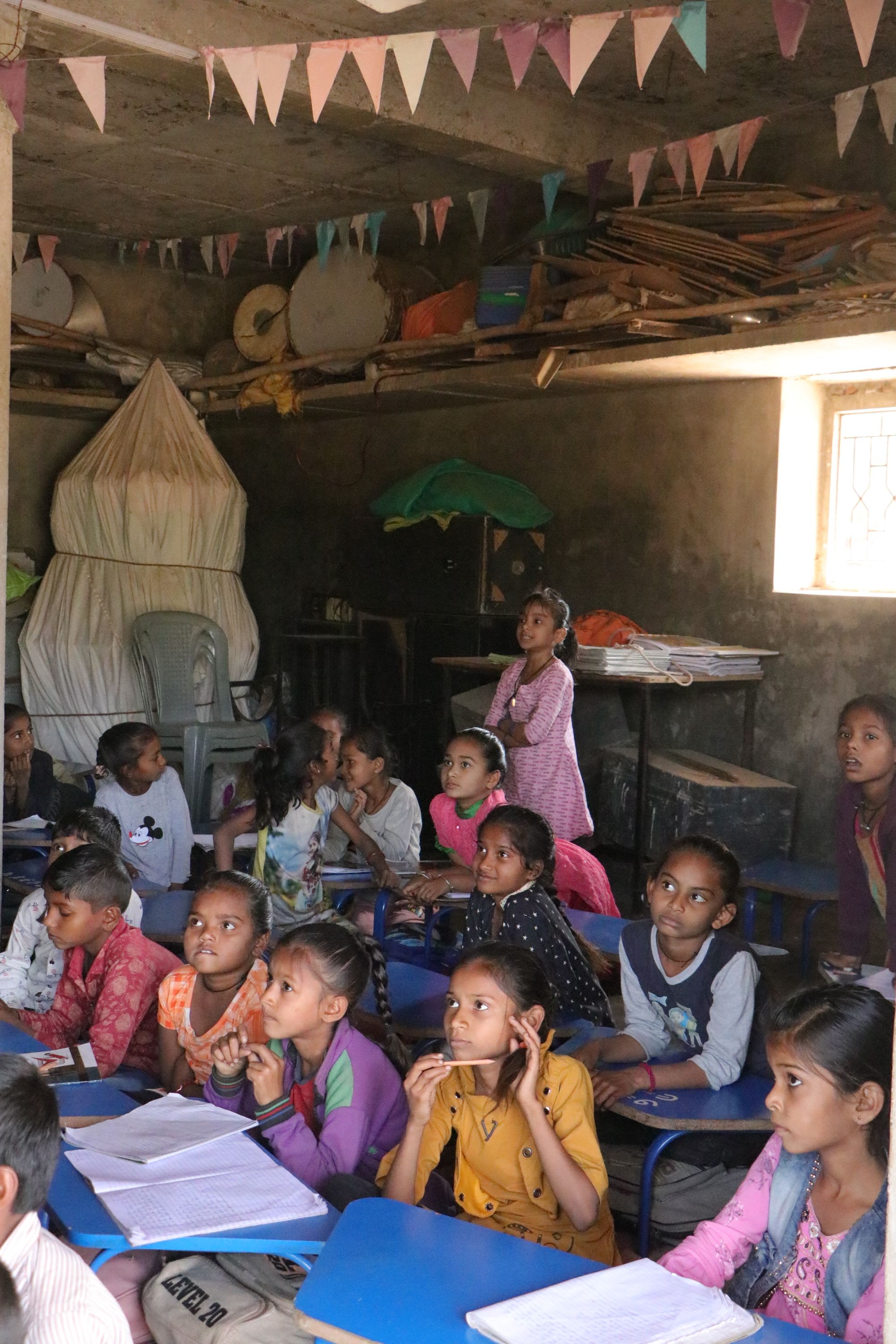
01 — About the Council
A not-for-profit institution working at the intersection of education, institutional excellence, process excellence, policy implementation, knowledge, capability development and societal transformation.
Who we are
The International Process Excellence Council is a not-for-profit Section 8 company, formally incorporated on 15 July 2025, with the mission of advancing excellence in education, governance, healthcare, industry and public institutions through evidence-based research, process excellence and knowledge innovation.
IPEC was established to bridge one of the most significant gaps in public policy: the transition from policy formulation to successful implementation. While many institutions focus on developing policies, comparatively fewer organisations work on creating practical implementation frameworks, measurable outcomes, institutional capability and continuous improvement systems.
Today, IPEC is developing frameworks that integrate Process Excellence, Lean Thinking, Six Sigma, Knowledge Management, artificial intelligence, behavioural sciences and data-driven decision making to support organisations in delivering measurable and sustainable impact.
At a glance
02
— Why IPEC exists
IPEC was established to help address these challenges through research, implementation support, institutional capability building and collaborative innovation. Its work is deliberately positioned in the space between policy and practice — the space where transformation agendas most often stall.
Transforming ideas, policies and aspirations into measurable institutional capability and sustainable outcomes.
03 — What we believe
Our work focuses on converting ideas into scalable and measurable outcomes. Sustainable progress depends on seven things, none of which arrives on its own.
04
— Our approach
01
Establish what is actually happening inside institutions, using evidence rather than assumption.
02
Equip educators, administrators and learners with methods they can apply the same week they learn them.
03
Work inside real institutions on real processes, not in workshop conditions.
04
Define what improvement would look like before the work begins, then measure against it.
05
Document what worked, what did not, and under what conditions — so the learning survives the project.
06
Leave behind a standing capability rather than a completed intervention.
07
Extend proven frameworks to further institutions, districts, states and countries.
01
Establish what is actually happening inside institutions, using evidence rather than assumption.
02
Equip educators, administrators and learners with methods they can apply the same week they learn them.
03
Work inside real institutions on real processes, not in workshop conditions.
04
Define what improvement would look like before the work begins, then measure against it.
05
Document what worked, what did not, and under what conditions — so the learning survives the project.
06
Leave behind a standing capability rather than a completed intervention.
07
Extend proven frameworks to further institutions, districts, states and countries.
Disciplines the work integrates
05
— Strategic focus
Institutions rarely fail for want of vision. They struggle because execution is inconsistent.
The domainEducation prepares students for examinations. Life asks for considerably more.
The domainExcellence measured by curiosity, creativity, research capability and judgement — not examination scores alone.
The domainInstitutions generate knowledge every day. Almost none of it survives the person who created it.
The domainHealthcare excellence extends beyond treating illness. It is about designing systems that deliver safe, effective and compassionate care consistently.
The domainExtending the work of the other five domains beyond national boundaries — in both directions.
The domain
Rishikesh, Uttarakhand · Unsplash
06 — Our journey
Since incorporation, IPEC has initiated pilot programmes across universities and schools, collaborated with academic and industry partners, and laid the foundation for the NEP 2030 Strategic Forum.
July 2025
IPEC is formally incorporated
2025
Jawaharlal Nehru Technological University Anantapur (JNTUA)
December 2025
Motion Competition School, Agra
February 2026
Skylark World School, Lucknow
April 2026
Varenya International School, Ballia
07
— Legal status
08
— Working together
Elsewhere in About IPEC
What the Council is for, and what it holds itself to.
Read moreFrom incorporation through four institutional deployments to a policy platform.
Read moreThe Board, executive leadership and committee chairpersons.
Read moreHow IPEC is governed and how decisions are made.
Read moreSix Excellence Committees and eighteen sub-committees.
Read moreRegistrations, policies, disclosures and accountability.
Read moreGet involved
Government departments, schools, universities, healthcare institutions, corporates, NGOs and international organisations each have a distinct route into the Council's work.