
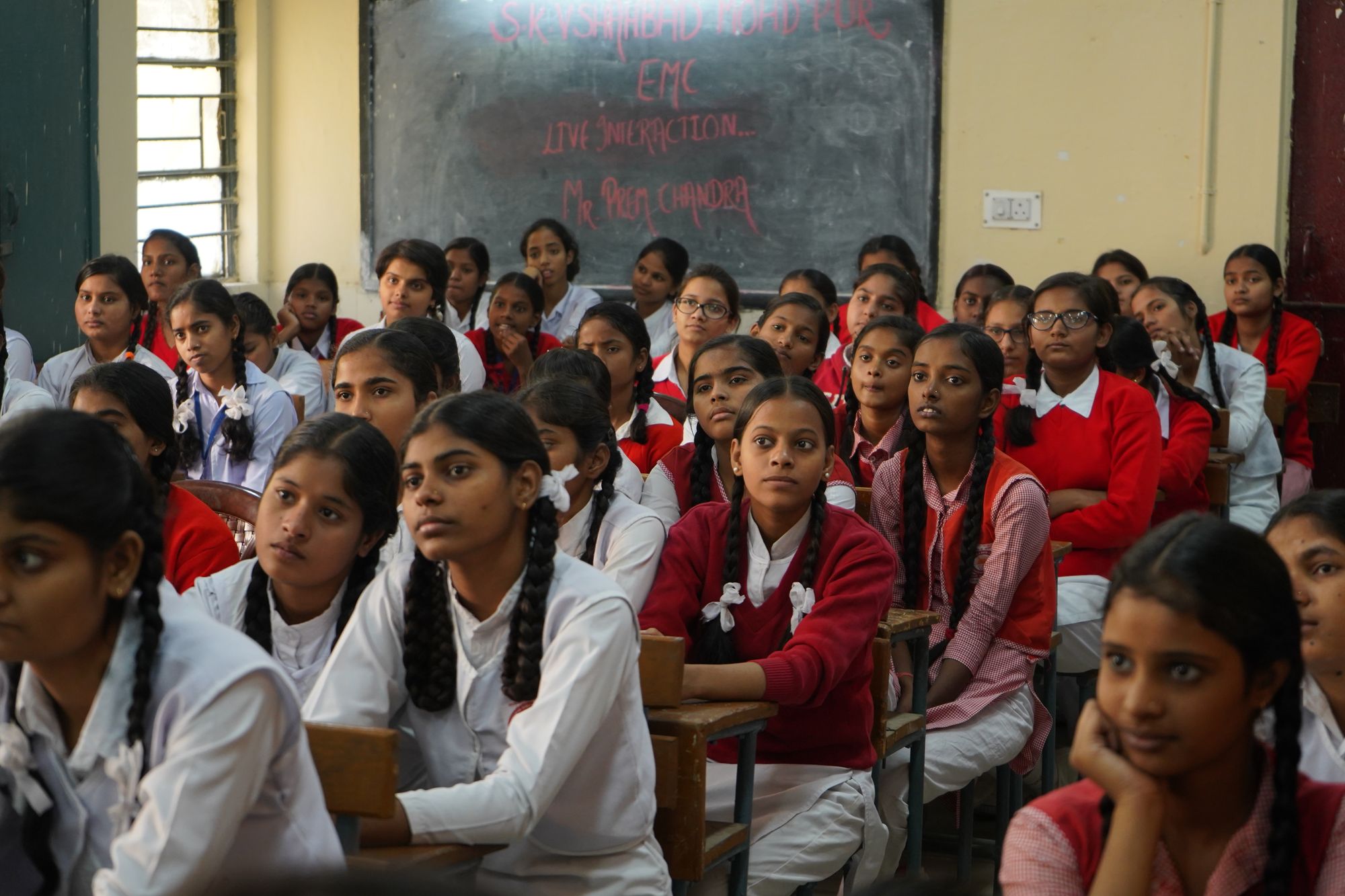
01 — Contribute to the mission
Support capability, knowledge and opportunity.
A contribution to IPEC does not buy inputs. It builds the frameworks, training, measurement systems and Excellence Cells that let an institution keep improving after the funded work ends.
- Legal status
- Section 8
- Tax registration
- 12A and 80G
- Programme areas
- Twelve
- Payment
- Third-party gateway
What a contribution does
Your contribution can support capability, knowledge and opportunity — enabling institutions and learners to build a culture of continuous improvement.
Capability continues to produce benefit after the funded period ends. Inputs generally do not. That is why the Council’s programmes are designed around what an institution will still be able to do in three years’ time.
01
Contribution
Applied to the programme area you select.
02
Programme
Frameworks, training and Excellence Cells.
03
Institution
A school, college or community.
04
Measurement
Against a baseline set beforehand.
05
Reporting
Outcomes published, including shortfalls.
01
Contribution
Applied to the programme area you select.
02
Programme
Frameworks, training and Excellence Cells.
03
Institution
A school, college or community.
04
Measurement
Against a baseline set beforehand.
05
Reporting
Outcomes published, including shortfalls.
01
— Where it goes
Twelve programme areas.
-
01
Project Raaj Drishti — teacher and leadership development
The Council's primary flagship programme: scholarships, educational leadership and capability building for teachers, principals and education leaders.
-
02
Raaj Drishti — sponsor an Education Fellow
Tuition support, stipend and milestone awards for one MA Education Fellow.
-
03
Raaj Drishti — sponsor a translation
Translation of learning material into a regional Indian language, so the programme reaches beyond English.
-
04
School programmes
Certification programmes, improvement projects and learning resources in schools.
-
05
Student learning
Statistical literacy, linguistic competency, AI literacy and student improvement projects.
-
06
Teacher development
Certification pathways and sustained professional development for teachers and school leaders.
-
07
Research
Independent research into what actually works in Indian institutions, published openly.
-
08
Knowledge resources
Frameworks, toolkits, curricula and their translation into Indian languages.
-
09
Excellence Cells
Establishing and supporting standing improvement capability inside institutions.
-
10
Community initiatives
Statistical literacy, linguistic competency and health awareness in communities.
-
11
Innovation
Developing and testing new approaches before they are ready for wider deployment.
-
12
Institutional capacity building
Governance, quality systems and measurement capability in public institutions.
02 — Contribute
Every contribution is recorded and receipted.
IPEC is registered under Section 80G of the Income Tax Act, which enables eligible donors to claim tax benefits on qualifying donations, subject to applicable law.
Whether a particular contribution qualifies, and to what extent, depends on applicable law and your own circumstances. IPEC issues receipts and the documentation required, and does not provide tax advice.

Patiala, Punjab · Pexels
Before you contribute
Contribution received
Thank you.
Your contribution supports the Council’s work in building institutional capability. A receipt is on its way to the email address you gave us.
If you asked for an 80G receipt, it will follow separately with the particulars required for a tax claim. Whether a contribution qualifies for a tax benefit depends on applicable law and your own circumstances.
Contribution not completed
The payment did not go through.
No amount has been taken. This is usually a temporary issue with the payment route rather than anything to do with your card or account.
03
— The donor ladder
Every tier attached to something a teacher or a student actually receives.
- 01Citizen₹1,000Sponsor a teacher's learning hours
- 02Patron₹10,000Sponsor one White or Yellow Belt certification
- 03Champion₹50,000Sponsor one student fellow
- 04Founder₹1 lakhSponsor regional-language translation of learning material
- 05Legacy Partner₹10 lakh+Sponsor a full cohort
- 06Institutional Partner₹50 lakh+Sponsor a district pilot
Sponsor a story
- Sponsor a Teacher
- Sponsor an Education Fellow
- Sponsor a Translation
- Sponsor a School Improvement Project
What contributors receive
- A Digital Impact Report to every donor
- The Donor Wall
- Named Fellowships from ₹1 lakh
- Invitation to the Annual Education Impact Day
04
— Other ways to support
Not every contribution is financial.
-
Corporate and CSR
Fund a defined programme across a named set of institutions, with measurement agreed beforehand.
Build a CSR partnership -
Volunteer your expertise
Curriculum, translation, research, outreach or committee contribution.
Offer your time -
Become an ambassador
Join a trained volunteer network in one of six domains.
Apply to join -
Institutional partnership
Bring your school, college or department into the work directly.
Partner with IPEC
05
— Frequently asked questions
Contributions, answered.
The full knowledge baseYes. Individual contributions are welcomed and are directed to the programme areas the contributor selects.
IPEC holds registration under Section 80G of the Income Tax Act, which enables eligible donors to claim tax benefits on qualifying donations, subject to applicable law.
Whether a particular contribution qualifies, and to what extent, depends on applicable law and the donor's own circumstances. IPEC issues receipts and the documentation required, but does not provide tax advice.
Payments are processed by a third-party payment gateway. IPEC does not store card numbers, CVV data or banking credentials on its own systems.
Recurring contribution options will be offered subject to the capabilities of the payment gateway once integration is complete.
Contributions from outside India
Foreign contributions are governed by the Foreign Contribution (Regulation) Act, 2010. IPEC has not published an FCRA registration. Prospective international contributors should therefore contact the Council directly before making any commitment, rather than using the form above.
Contact the CouncilAccountability
The Council publishes what it can support, and marks what it cannot.
Legal status, registrations, delivered programmes and the measurement framework are all on the record. Impact figures will be published when they have been measured — not before.